
South Africa could be in for another good harvest

Highlights in today’s morning note: 20 February 2018
February 20, 2018
SA food and non-alcoholic price inflation decelerates further to 4.5%
February 21, 2018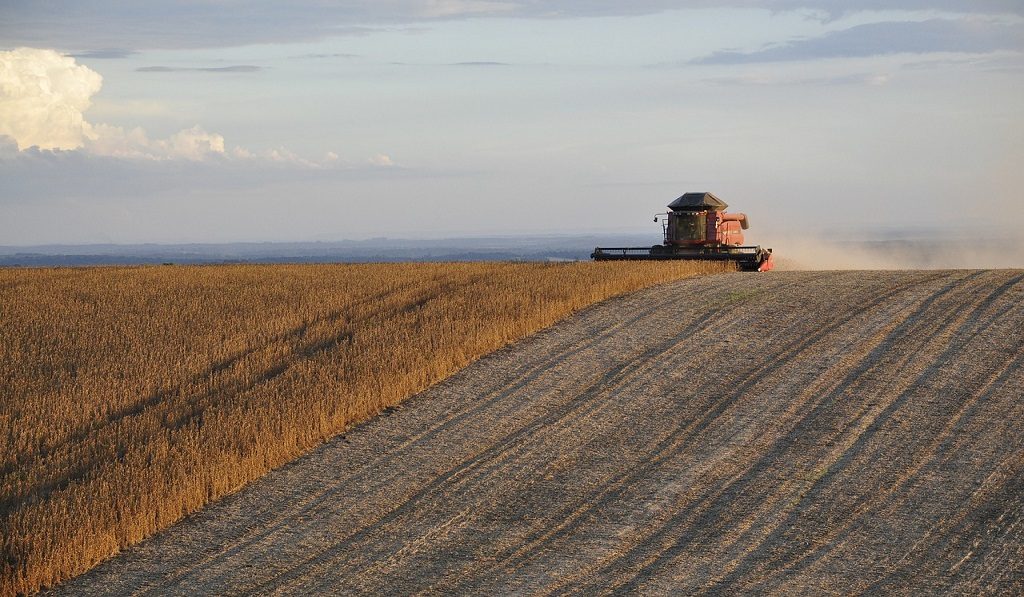
Agbiz Morning Market Viewpoint on Agri-Commodities: 21 February 2018
Highlights in today’s morning note
Maize:
The weather remains a key focus in the South African maize market as the crop is still in its early stages of development. The eastern sections of the country, which mainly produce yellow maize, received showers of between 16 and 44 millimetres on Monday. This was mainly concentrated in the regions of Frankfort, Amersfoort, Bethal, Carolina, Davel, Delmas, Ermelo, Graskop, Hendrina, Leandra, Lydenburg, Morgenzon, Witbank and Wonderfontein.
Meanwhile, other sections of the country had a cool and drier start of the week. Nonetheless, South Africa’s maize crop is in good condition across, thanks to good rainfall received in the past few weeks. Last night, the central areas of the maize belt also received light showers, which bodes well for the crop. Looking ahead, the expected heavy rainfall within the next eight days will further improve soil moisture and benefit the crop.
From a trade perspective, South Africa exported 39 742 tonnes of maize in the week ending 16 February 2018, up by 35% from the volume exported the previous week. About 80% of these exports were yellow maize, with 20% being white maize. This placed South Africa’s 2017/18 maize marketing year exports at 1.96 million tonnes, which equates to 84% of the season’s export forecast of 2.34 million tonnes.
Wheat:
As we set out in yesterday’s note, the weather is currently of less importance in the winter wheat growing areas of South Africa as the harvest process is totally over. However, the recent developments in the major wheat production province, Western Cape, are worth mentioning. The weather charts for the next eight days show a possibility of showers of between 16 and 40 millimetres across the province.
Moreover, the most recent data from the Department of Water and Sanitation shows that on 19 February 2018, the province’s dam levels averaged 23%, unchanged from the previous week, but 10 percentage points lower than the corresponding period last year.
Apart from the weather aspects, South Africa continues to receive large volumes of wheat imports. The country imported 97 392 tonnes in the week ending 16 February 2018, up by 49% from the previous week. About 61% from Germany, 30% from Lithuania and 9% from the United States. This placed 2017/18 marketing year’s wheat imports at 923 576 tonnes, which equates to 49% of the seasonal import forecast of 1.90 million tonnes.
Although a net importer of wheat, South Africa continues to export wheat to regional markets. The 17th batch of exports this season was recorded at 1 822 tonnes and went out last week. This is treble the volume exported the previous week. About 46% of wheat went to Lesotho, 41% to Swaziland, 11% to Botswana and 2% to Namibia. Overall, South Africa’s 2017/18 wheat exports stand at 11 906 tonnes.
Soybeans:
Although the local market has recovered from levels seen in the past few weeks, the spot price is still 27% lower than the levels observed on 21 February 2017. These losses are mainly on the back of the large stock and favourable outlook for the new season crop.
As set out in our note on Monday, the 2017/18 soybean marketing year will end with a large carryover stock of 340 862 tonnes, which is treble the volume seen in the 2016/17 marketing year. This will boost South Africa’s soybean supplies in the 2018/19 marketing year, which starts on 01 March 2018.
In terms of the new season crop, South Africa could be in for another good harvest, although might be relatively lower than the 2016/17 production season’s one. We believe that the harvest could at least reach 1.2 million tonnes, down by 8% from the previous season.
The weather conditions have generally been favourable across many soybean growing areas from the start of the season. Moreover, the forecasts for the next eight days paint a possibility of heavy rainfall of over 70 millimetres in the soybean growing areas in the country. While this is a welcome development, hail is always a key concern for the eastern sections of South Africa, especially when there are expectations of heavy rainfall.
RSA Potatoes:
After recording losses at the start of the week, the potatoes market gained ground in yesterday’s trade session and settled in positive territory. This was on the back of relatively lower stock of 756 013 pockets (10kg bag) at the start of the session. The price was up by 15% from the previous day, closing at R35.30 per pocket (10kg).
However, during the session, the market saw an uptick in deliveries as harvest activity picks up after a quiet period in the weekend. This led to a 9% increase in daily stocks to 823 322 pockets (10kg bag).
RSA fruit:
The fruit market posted gains in yesterday’s trade session, largely supported by commercial buying interest. The prices of apples and bananas were up by 12% and 11% from the previous day, closing at R9.18 and R5.57 per kilogram, respectively. However, these gains could be short-lived due to large stocks of 161 000 tonnes of apples and 345 000 tonnes of bananas.
Moreover, the price of oranges significantly increased by 31% from the previous day and settled at R9.86 per kilogram owing to lower stocks and commercial buying interest. At the end of the session, the stocks had slightly improved to 34 000 tonnes, following an uptick in deliveries. With that said, this is still below levels of over 50 000 tonnes that were seen in December 2017.
Click below for the full report by Wandile Sihlobo
Agbiz Morning Market Viewpoint on Agri-Commodities 21 February 2018


